What Does A Truly Timeless Logo Really Mean?
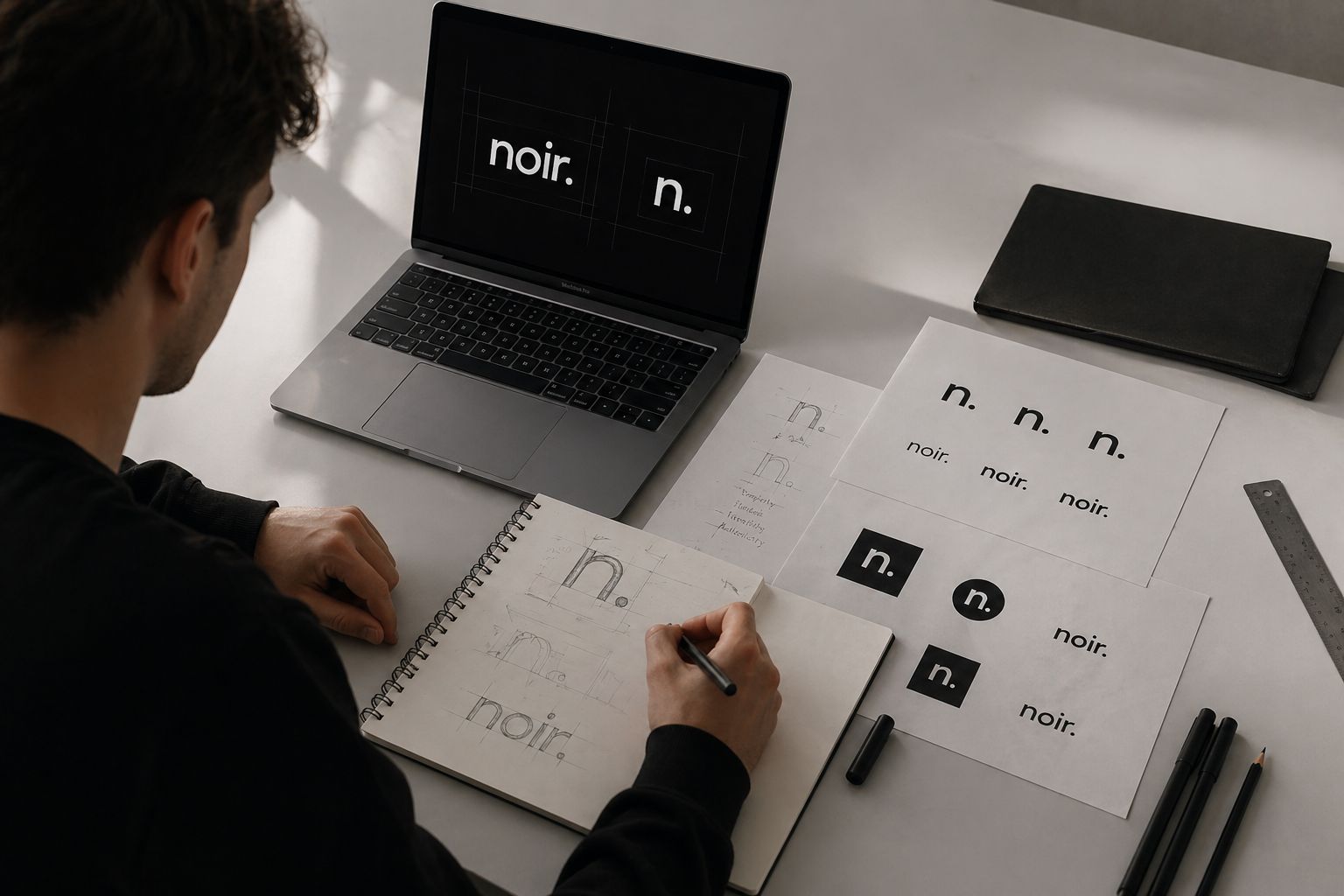

Your logo still exists. But does anyone still recognise it?
Every year, new design trends flood the industry. Glassmorphism, hyper-minimalism, variable fonts, motion-responsive identities, AI-generated aesthetics. And almost every business owner eventually asks the same question: "Does my logo look outdated?"
Wrong question.
The right question is: will it still work in 15 years?
A timeless logo is not about keeping up with trends. It is about existing completely outside of them. It is not built for the moment it launches. It is built for the decade that follows.
What timeless actually means
Built on principles, not aesthetics
There is a common misconception that a timeless logo means a simple one. Stripped back, neutral, safe. But timeless has nothing to do with simplicity for its own sake.
A timeless logo is one built on principles rather than aesthetics, on structure rather than style, on clarity rather than decoration. It can carry personality, weight, and distinctiveness. What it cannot carry is dependency on a trend that will expire in three years.
The logo that tries to say everything
There is a category of logo that tries to do too much. The brief sounds like this: we want it to reflect our values, our mission, our industry, our initials, and maybe a hidden symbol that represents growth. The result is a logo that says everything and communicates nothing clearly.
Memorability is built on reduction, not density. The human brain retains simple forms, responds to clear contrast, and processes stable structures almost instantly. A logo overloaded with meaning becomes difficult to reproduce, loses impact at small sizes, and cannot be applied consistently.
Your logo is not your brand story. The logo is a visual anchor. Nothing more, nothing less.
seconds is all the human brain needs to decide whether a logo is memorable. Reduction wins, density loses.
When complexity earns its place
That said, there are logos that carry visual richness and work beautifully for it. The Rolex crown, the Rolls-Royce monogram, the Chanel interlocking C. These are not minimal. They are layered, considered, and deliberately dense.
They function because of what sits behind them, over a century of heritage, global recognition built across generations, and a customer base that already knows the name before they see the symbol. In that context, visual richness becomes heritage.
But here is the uncomfortable question: are you Rolex? If not, a complex logo does not add value. It adds friction.
The case of noir.
noir. is a strong example of a logo built on conceptual clarity rather than decorative ambition. The name itself carries the entire visual world of the brand: dark aesthetic, cold colour grading, deep shadows, silhouettes, high-contrast imagery.
The logo does not need to illustrate all of that. It signals it. The word alone activates an entire visual language in the mind of the right audience, cinematic, moody, precise. That is exactly what a timeless logo should do. Not explain the brand, but anchor it. The identity does the rest.
Less words. More signal. The noir. promo, in its own language.
What actually makes a logo last
There are a handful of principles that separate a logo built to endure from one built for this season.

The favicon test — the same mark, integrity intact at every size.
Recognisable at favicon size
If it doesn't read at 16 pixels, it isn't a logo. It's an illustration.
Reduced, not stripped
Freed from everything unnecessary, but not stripped of personality. Restraint is not the same as absence.
Works on every surface
Billboard, business card, product label, social media profile. If integrity drops on any of them, the design is incomplete.
Independent of trends
It must stand completely outside whatever visual trend is currently dominating design feeds.
The real secret behind brand equity
Most business owners believe that strong branding requires constant creative evolution. Refreshes, updates, modernisation. The brands with the greatest equity do the opposite. They repeat.
The same form, the same colour, the same visual structure, year after year. Repetition creates memory, memory creates trust, trust creates value.
@catalyc.store
Think about the brands you trust most. They have not radically changed their visual identity every two years. They make subtle refinements and quiet optimisations, but the core form stays. Because repetition creates a neurological imprint, the brain seeks familiarity, familiarity reduces perceived risk, and reduced risk increases the likelihood of a purchase decision.
Branding is applied psychology, not an artistic exercise.
A good logo does not try to impress. It tries to be remembered. And memory is not built through complexity. It is built through clarity and consistency, applied over time with discipline.
In branding, elegance comes from restraint, not from accumulation.
Just launched a business and not sure what logo will represent you for the next 10 years? Don't guess. Let's build an identity made to last.
LET'S CHAT.LET'S CHAT.